





How to set boundaries
LISTEN IN APPLE PODCASTS | LISTEN IN SPOTIFY
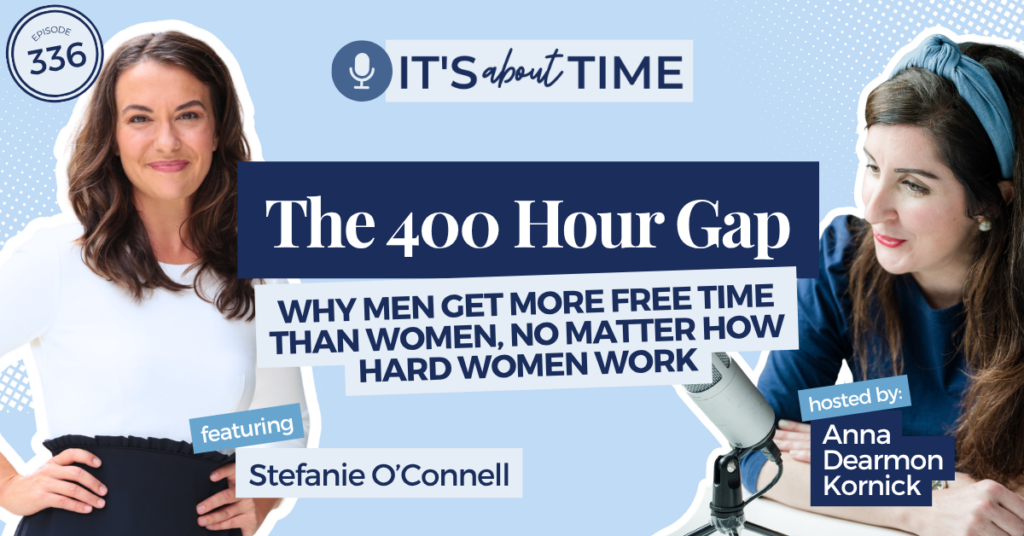
Working Mom Burnout: Why It Is Not a You Problem
If you are dealing with working mom burnout, you already know the feeling: you have done everything you were told to do. Spoken up. Negotiated. Leaned in. And you are still exhausted, still overlooked, still carrying more than your share. This week I sat down with journalist Stefanie O’Connell, author of the new book The Ambition Penalty, to talk about why that burnout is not a personal failure, and why the advice we were given about confidence and negotiation was never the whole story.
Key Takeaways
- Recognize your own motivation style, whether you are deadline driven or self directed, so you can build systems that actually work for you
- Match your tasks to your available energy, not just your available time
- Understand why the confidence gap is a myth, and what the research actually shows about negotiation outcomes
- Create external accountability through coaches, small commitments, or communities instead of relying on willpower alone
- Shift your focus from individual self optimization to collective and environmental change
The Ambition Penalty, Explained
Stefanie’s new book takes its name from a term she coined to describe something a lot of high achieving women have felt but couldn’t quite name. Women are told that with enough confidence and enough asking, the playing field will even out. Instead, many find that the same behaviors that get their male peers rewarded get them labeled difficult, ungrateful, or not a team player.
The research backs this up. Women negotiate their salaries just as often as men do. They are simply less likely to get what they ask for. Stefanie’s reporting shows that believing the opposite, that women just need to negotiate more, actually increases gender stereotyping and reduces support for pay equity policies. In other words, the myth itself is part of the problem.
Why Willpower Isn’t the Answer
One of the most useful parts of this conversation was hearing how Stefanie gets big, overwhelming projects done. She is upfront about it: self imposed deadlines do not work for her. What does work is external accountability, whether that is a paid coach, a small pitch that turns into a real deadline, or a standing call with a group of fellow writers.
This ties directly into something I talk about often inside my coaching practice. Knowing whether you are pressure prompted or an early starter changes everything about how you should structure your time. If you have ever wondered why your carefully planned system falls apart by Wednesday, this episode offers a different way to think about it.
What Working Mom Burnout Actually Looks Like
Stefanie also shared something that reframed how I think about capacity, and it gets right at the heart of working mom burnout. During her heaviest season of book promotion, with a toddler at home, she noticed that even when she technically had time available, she often did not have the energy to use it well. Her fix was not to squeeze in more. It was to protect time for rest as intentionally as she protected time for work.
That distinction between time and energy matters. It is a reminder that a full calendar is not the same thing as a sustainable one, and that burnout is not solved by better scheduling alone.
The Case for Collective Change
Perhaps the most eye opening moment of the conversation was a statistic Stefanie shares in her book. In the United States, men have more than four hundred extra hours of personal leisure time every single year compared to women, without giving up any professional or economic ground to get it. That stat is part of why this conversation gets me fired up, and why Stefanie argues that the fix cannot be purely individual. It has to happen at the level of homes, workplaces, and policy.
About the Guest
Stefanie O’Connell is an award winning journalist covering money, power, and ambition, with work published in Slate, Bloomberg, Newsweek, USA Today, Glamour UK, Business Insider, and CNBC.com. She wrote, hosted, and coproduced Real Simple magazine’s Webby Award winning podcast, Money Confidential, and she publishes the Too Ambitious newsletter. She lives in New York City with her family. Her new book, The Ambition Penalty, How Corporate Culture Tells Women to Step Up and Then Pushes Them Down, is out now.
Episode Links + Resources
- The Ambition Penalty by Stefanie O’Connell
- Too Ambitious newsletter on Substack
- Follow Stefanie on Instagram, Threads, TikTok, LinkedIn, YouTube
- Apply for a free time management coaching session: freetimecall.com


Be the first to comment