





How to set boundaries
LISTEN IN APPLE PODCASTS | LISTEN IN SPOTIFY
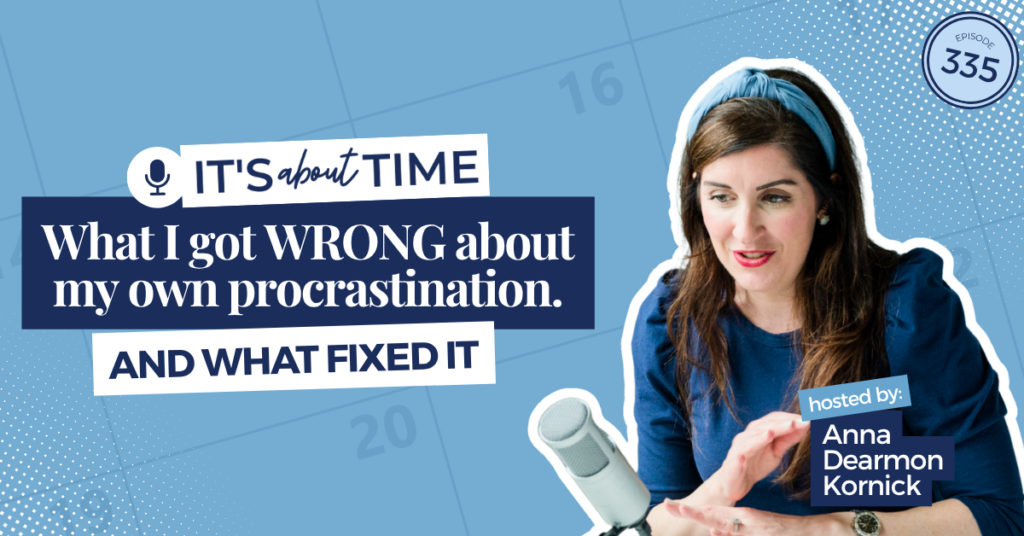
Why Do I Procrastinate? It’s Not a Discipline Problem
If you’ve ever asked yourself “why do I procrastinate” on something you actually care about, you’re not alone, and you’re not lazy. In this episode, I get honest about nearly missing a deadline I was genuinely excited about, and the moment I realized the real problem was never a lack of discipline. We’re talking about why capable, driven people still get stuck, and the one shift that changes how you handle whatever you’re avoiding right now.
Key Takeaways
- Recognize that procrastination and laziness are not the same thing
- Understand why your brain resists things that actually matter to you
- Catch yourself misdiagnosing overwhelm as a lack of willpower
- Replace self-judgment with curiosity the next time you stall
- Identify the real question to ask before you try to force yourself into action
Why Capable People Still Get Stuck
It’s easy to assume that if you’re organized, driven, and generally on top of things, procrastination shouldn’t happen to you. But some of the most capable people I know, including me, still hit a wall on something that genuinely matters to them.
A few months ago, I had a deadline I was excited about, and I still couldn’t make myself start. My first instinct was to assume something was wrong with me. If I coach people on this for a living, why couldn’t I just do it myself?
That question sent me down the wrong path entirely.
The Trap of Trying to Fix It With Willpower
When something feels stuck, the natural response is to push harder. Block off more time. Tell yourself to stop making excuses. Force a work session and hope it sticks.
I tried all of that. And it didn’t work, because I was solving for the wrong problem.
It wasn’t until I looked at the actual week I was living, not just the one task sitting on my list, that things clicked. My plate was already full. I had added one more thing to a stack that was already tall. I wasn’t avoiding the work because I lacked discipline. I was overloaded.
Discipline can’t fix a diagnosis you got wrong.
Procrastination Has a Cause, Not Just a Symptom
Here’s the shift that changes everything: procrastination isn’t one single problem with one single fix. It’s a symptom, and symptoms have causes.
Our brains are wired for safety, not for success. That’s not a character flaw, it’s biology. When something feels unsafe in some way, whether that’s because it’s scary, overwhelming, boring, or you’re simply running on empty, your brain quietly steers you away from it.
The specific reason changes from task to task, and from week to week. Which means the real skill isn’t gritting your teeth harder. It’s getting curious enough to figure out what’s actually going on before you try to fix it.
One Question to Ask Instead
The next time you catch yourself avoiding something that matters to you, resist the urge to jump straight to “just do it” or spiral into “what’s wrong with me.” Neither one gets you very far.
Instead, pause and ask yourself what’s actually going on here. Are you scared of it? Is it too big and undefined? Is your plate simply too full? Are you bored out of your mind, or genuinely running on empty?
You don’t have to solve it in that moment. Getting curious instead of critical is what makes it possible to find a fix that actually fits.
Episode Links and Resources
Want to go even further with this? I created The Procrastinator’s Playbook to help you pinpoint exactly which pattern is showing up for you and what to do about it. The only way to get it is with a free ticket to Get Organized HQ Virtual, where I’ll be one of the speakers this year alongside a lineup of other experts, covering over 100 sessions on everything from home organization to budgeting to travel packing. Registration opens August 24th, so keep an eye out.
Apply for a free time management coaching session: freetimecall.com


Be the first to comment