





How to set boundaries
LISTEN IN APPLE PODCASTS | LISTEN IN SPOTIFY
High Functioning Anxiety: Signs High Achievers Often Miss
Have you ever felt like you’re doing everything “right” — but still feel overwhelmed inside?
From the outside, life might look successful. You’re responsible, productive, and people depend on you. You meet deadlines, manage your commitments, and keep moving forward.
But internally? Your mind rarely slows down. You replay conversations, worry about making mistakes, and feel constant pressure to keep achieving.
If that sounds familiar, you might be experiencing high functioning anxiety.
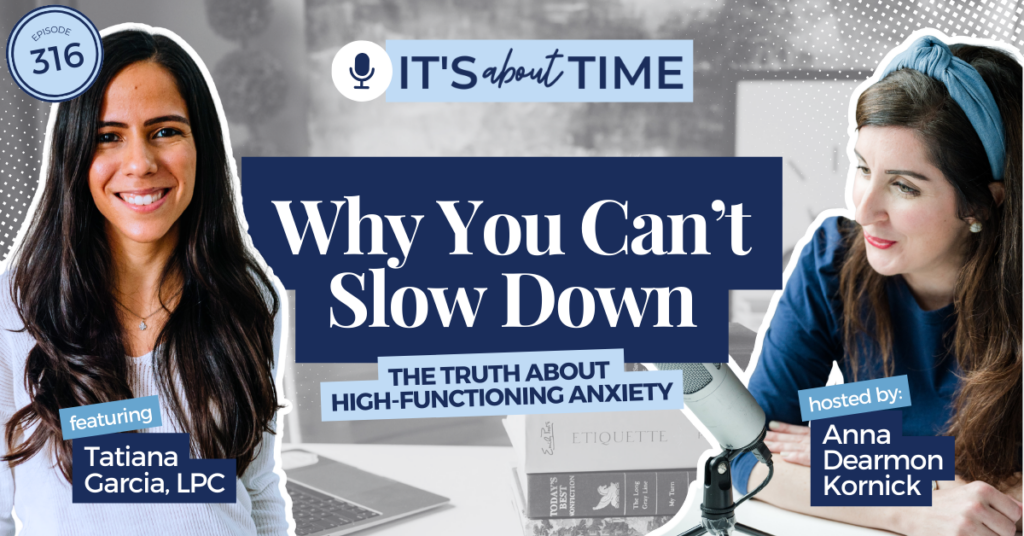
In this episode, Anna sits down with therapist and anxiety expert Tati Garcia to unpack what high functioning anxiety really looks like. Together they explore why it’s so common among ambitious professionals — and how awareness, mindfulness, and self-compassion can help you step out of the pressure cycle.
If you’ve ever wondered why success doesn’t always bring peace of mind, this conversation will help you understand what’s really going on beneath the surface.
Key Takeaways from This Episode
- Recognize the hidden signs of high functioning anxiety that often appear behind success
- Understand why high achievers tend to push harder instead of slowing down
- Learn how anxiety can show up physically — even when you don’t feel worried
- Discover how awareness and mindfulness can interrupt the anxiety cycle
- Explore why self-compassion is one of the most powerful tools for reducing pressure
What Is High Functioning Anxiety?
High functioning anxiety describes a pattern where someone appears successful and capable on the outside, while internally experiencing constant stress, pressure, or overthinking.
Unlike many anxiety disorders that may lead to avoidance, high functioning anxiety often leads people to do more, work harder, and push themselves further.
This is why it can be difficult to recognize.
People experiencing high functioning anxiety often:
- Achieve highly at work
- Take on many responsibilities
- Strive for perfection
- Feel pressure to meet expectations
- Struggle to relax or slow down
Because these behaviors are often rewarded professionally, the anxiety driving them can go unnoticed for years.
However, the internal cost can be significant.
Over time, this pattern may lead to burnout, chronic stress, or emotional exhaustion.
Why High Achievers Often Struggle With High Functioning Anxiety
Many high achievers believe their anxiety is what keeps them successful.
They might think:
- “If I slow down, everything will fall apart.”
- “I need to stay ahead of everything.”
- “If I don’t work harder, I’ll disappoint people.”
This mindset creates a powerful cycle.
Anxiety fuels productivity.
Productivity brings praise or results.
The brain then associates anxiety with success.
As a result, slowing down can feel uncomfortable or even unsafe.
But the truth is that constant pressure isn’t sustainable.
Learning to recognize the underlying patterns is the first step toward creating a healthier relationship with work, expectations, and achievement.
Anxiety Doesn’t Always Look Like Worry
One of the most eye-opening parts of this conversation is the reminder that anxiety doesn’t always show up as conscious worry.
Instead, it can appear physically.
Because anxiety activates the body’s fight-or-flight response, people may experience symptoms such as:
- Chest tension or tightness
- Headaches
- Digestive issues
- Fatigue
- Difficulty relaxing
Sometimes these physical signals appear even when someone doesn’t feel actively worried about anything.
That’s because the brain may still be processing stress or anticipating challenges in the background.
Understanding this mind-body connection can help people recognize anxiety earlier — before it turns into burnout.
The First Step to Breaking the Anxiety Cycle
When people hear about high functioning anxiety, they often want a quick solution.
However, the first step is much simpler — and more powerful — than most expect.
Awareness.
You can’t change what you don’t notice.
Building awareness means becoming curious about your thoughts, feelings, and behaviors throughout the day.
For example, you might ask yourself:
- Why do I feel pressure to respond immediately?
- Is this task truly urgent?
- What expectation am I placing on myself right now?
Even small moments of reflection can reveal patterns that previously felt automatic.
Over time, this awareness creates space to choose a different response.
Why Self-Compassion Is Essential for High Achievers
Many people with high functioning anxiety are extremely kind and supportive toward others — but very critical of themselves.
Self-compassion changes that dynamic.
It means responding to yourself with the same understanding you would offer a friend.
Instead of thinking:
“Why am I like this?”
You might say:
“This makes sense. I’ve been under a lot of pressure.”
Self-compassion doesn’t remove ambition or motivation.
Instead, it allows you to pursue your goals without constant internal criticism.
And that shift can dramatically reduce the stress that fuels high functioning anxiety.
Frequently Asked Questions About High Functioning Anxiety
What is high functioning anxiety?
High functioning anxiety describes a pattern where someone appears successful and capable externally but internally experiences persistent stress, pressure, or overthinking. People with high functioning anxiety often achieve highly at work and in life, but their productivity is frequently driven by fear of failure, perfectionism, or constant self-pressure.
What are common signs of high functioning anxiety?
Some of the most common signs of high functioning anxiety include overthinking decisions, difficulty relaxing, feeling constant pressure to perform, fear of disappointing others, and struggling with perfectionism. Physical symptoms such as headaches, chest tension, fatigue, or digestive issues can also occur because anxiety activates the body’s stress response.
Why is high functioning anxiety common among high achievers?
High achievers often receive praise and rewards for productivity and responsibility. Over time, anxiety-driven behaviors like overworking or perfectionism can become reinforced because they lead to professional success. This can make it difficult to recognize the anxiety behind the achievements.
How can someone start managing high functioning anxiety?
The first step in managing high functioning anxiety is awareness. Paying attention to thoughts, emotions, and physical signals throughout the day can help identify patterns of pressure or overthinking. Practices like mindfulness, setting boundaries, and developing self-compassion can also help reduce the internal pressure that fuels anxiety.
Episode Links & Resources
- Visit Tati’s Website
- Follow Tati on Instagram
- Take Tati’s High Functioning Anxiety Quiz
- Listen to Tati’s podcast: Calmly Coping
- Check out theMindfulness-Based Stress Reduction Course by Jon Kabat-Zinn
About the Guest
Tati Garcia, LPC, is a psychotherapist, coach, and speaker who helps high-achieving professionals break free from anxiety, perfectionism, and burnout. With over 13 years of experience in the mental health field, she blends clinical expertise with personal experience to guide clients toward confidence and balance. Through her therapy practice, the Calmly Coping podcast, and online resources, Tati empowers ambitious individuals to thrive without sacrificing their well-being.
Related Episodes
Ep. 231 – 3 Ways to Use Time Management to Stop Stress in its Tracks
Ep. 216 – The Art of Enough: How to Break the Cycle of Overwhelm and Overcommitment


Be the first to comment